
Science – Carbon and its Compounds
Long Answer Type Questions
Q.1) How can ethanol and ethanoic acid be differentiated on the basis of their physical and chemical properties?
Ans) Ethanol and Ethanoic acid can be differentiated on the basis of their following properties:
(1). Ethanol is a liquid at room temperature with a pleasant smell. Ethanoic acid has a smell like vinegar. It has a melting point of 17°C. Since, it is below the room temperature, so it freezes during winter.
(2). Ethanol does not react with metal carbonates, while ethanoic acid reacts with metal carbonates to form salt, water and carbon dioxide. For example,
(3). Ethanol does not react with NaOH, while ethanoic acid reacts with NaOH to form sodium ethanoate and water. For example,
CH₃COOH + NaOH → CH₃COONa + H₂O
(4). Ethanol is oxidized to give ethanoic acid in presence of acidified KMnO₄, while no reaction takes place in ethanoic acid in presence of acidified KMnO₄..
Q.2) Why does micelle formation take place when soap is added to water? Will a micelle be formed in other solvents such as ethanol also?”
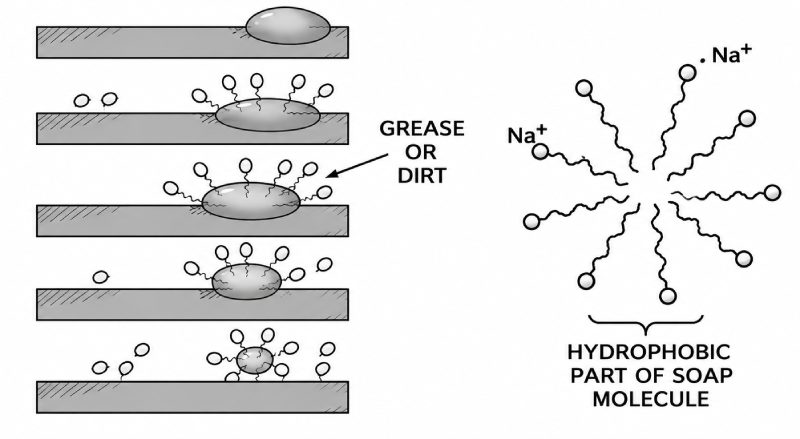
Ans) Soap molecule has two ends. One end is hydrophillic and another end is hydrophobic. When soap is dissolved in water and clothes are put in the soapy solution, soap molecules converge in a typical fashion to make a structure, called micelle. The hydrophobic ends of different molecules surround a particle of grease and make the micelle, which is a spherical structure. In this, the hydrophillic end is outside the sphere and hydrophobic end is towards the centre of the sphere. This is why micelle formation takes place when soap is added to water. Since ethanol is not as polar as soap, so micelles will not be formed in other solvents like ethanol.
Q.3) Explain the mechanism of the cleaning action of soaps.
Ans) The dirt present on clothes is organic in nature and insoluble in water. Therefore, it cannot be removed by only washing with water. When soap is dissolved in water, its hydrophobic ends attach themselves to the dirt and remove it from the cloth. Then the molecules of soap arrange themselves in micelle formation and trap the dirt at the centre of the cluster. These micelles remain suspended in the water. Hence the dirt particles are easily rinsed away.
Q.4) Carbon compound P on heating with excess conc. H,SO, forms another carbon compound ‘Q,’ which on addition of hydrogen in the presence of nickel catalyst, forms a saturated carbon compound ‘R’. One molecule of ‘R’ on combustion forms two molecules of carbon dioxide and three molecules of water. Identify ‘P’, ‘Q’ and ‘R,’ and write the chemical equations for the reactions involved.
Ans) ‘P’ is Ethanol which on heating with excess conc. H₂SO₄ forms a carbon compound ‘Q,’ which is ethene.

Ethene on addition of hydrogen in the presence of nickel catalyst gives ‘R’ which is ethane.

Combustion of ethane or ‘R’ gives carbon dioxide and water. It is an exothermic reaction.

Hence, P is Ethanol, Q is Ethene and R is Ethane.
Q.5) Draw the electron dot structure of the following:
- CH₄
- CO₂
b) Draw the structures of the following:
- Ethanoic acid
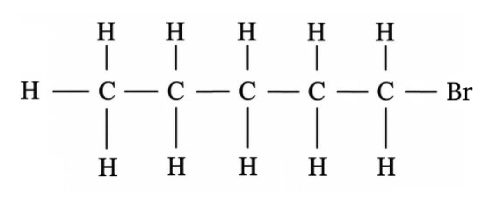
- Bromopentane
Ans) a) The electron dot structure of CH₄ is:
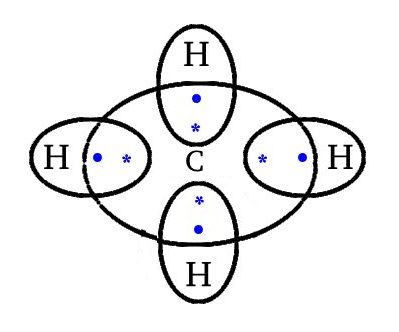
a). (ii). Electron dot structure of CO₂ is:
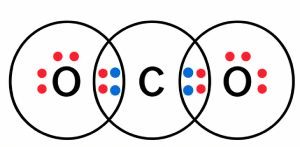
Ans) b). (i). Electron dot structure of Ethanoic acid is:
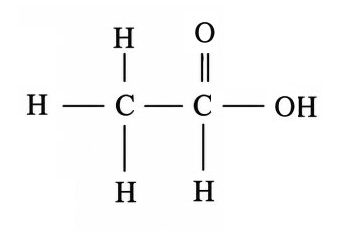
b). (ii). Electron dot structure of Bromopentane is:
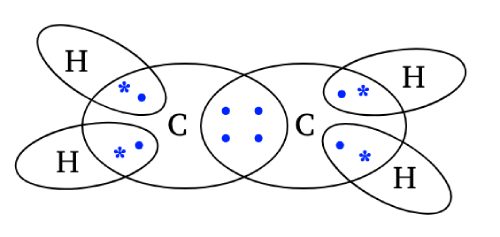
Q.6) Draw the electron dot structures of methane (CH₄) and ethene (C₂H₄).
Ans) Electron dot structure of methane (CH₄):
Electron dot structure of ethene (C₂H₄):
Q.7) (a) Write any two differences between soap and detergent. Or
Write the differences between soap and detergent. (Any four)
(b) Define the homologous series.
Ans) (a) Differences between soap and detergent are as follows:
| Soap | Detergent |
|---|---|
| Soaps are sodium or potassium salts of of long-chain carboxylic acids. | Detergents are generally sodium salts, sulphonic acids, or ammonium salts with chloride or bromide ions, etc. |
| Soaps do not form good lather with hard water. | Detergents form good lather. |
| Soaps form insoluble substances with the Ca and Mg salts present in hard water. | Detergents do not form insoluble substances with Ca and Mg salts present in hard water. |
| Soaps have less cleaning power than detergents. | Detergents have more cleaning power than soaps. |
(b) Define the homologous series – A homologous series is a series of carbon compounds that have different number of carbon atoms but contain the same functional group.
For example methane, ethane, propane, butane etc. are all parts of the alkane homologous series. The general formula of this series is CnH2n+2.
Methane (CH₄), ethane (C₂H₆), propane (C₃H₈), and butane (C₄H₁₀).
It can be noticed that there is a difference of -CH2 unit between each successive compound.
Q.8) Write the name, formula and structural formula of any four members of alkane homologous series.
Ans) Members of the alkane homologous series:
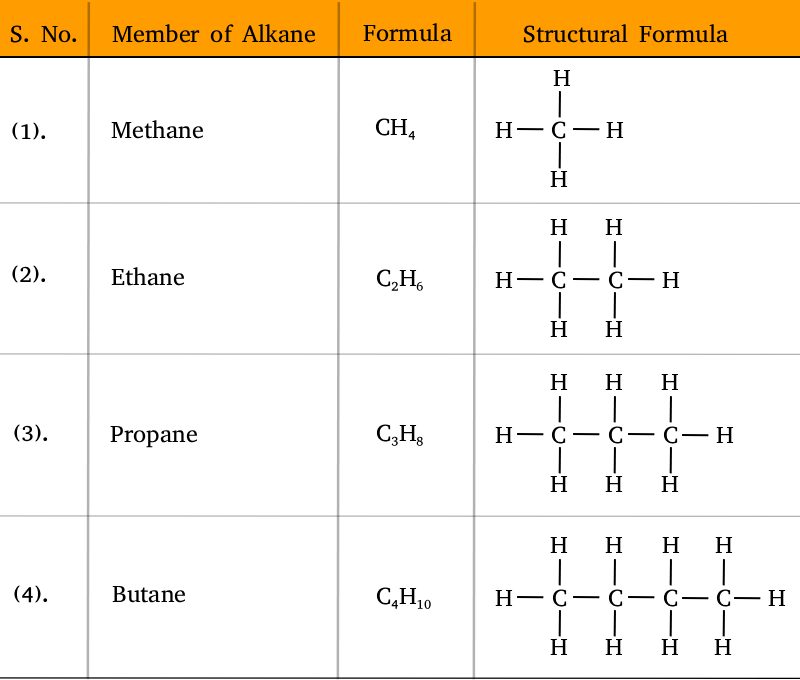
Q.9) Write the definition of hydrocarbon. Write first four members of hydrocarbons with names, formulas, and structural formula.
Ans) A hydrocarbon is a molecule consisting only of carbon and hydrogen atoms. Four members of hydrocarbons with names, formulas, and structural formula: –
Q.10) Define alkene and alkyne and give one example of each.
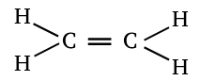
Ans) Alkenes – “The unsaturated hydrocarbons that contain one double bond are called alkenes”. Example -Ethene (C₂H₄) –
Alkynes – “The unsaturated hydrocarbons that contain one triple bond are called alkynes”. Example -Ethyne (C₂H₂) H—C≡C—H.